
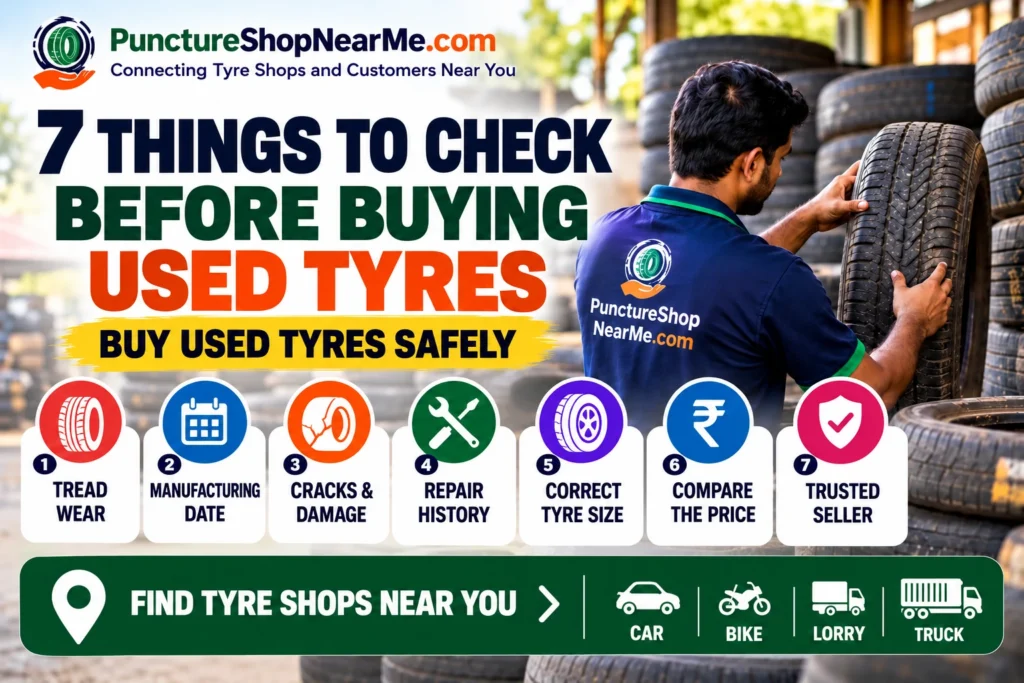
Buying new tyres can be expensive, so many car, bike and truck owners consider purchasing second-hand tyres to reduce their expenses. Buy Used Tyres Safely may appear to be an affordable option, but their condition and safety should always come first. Looking for tyre services or nearby tyre shops? Visit PunctureShopNearMe.com to explore tyre-related services and find shops in your area.
A tyre that looks good from the outside may have hidden damage, uneven wear or previous repairs that affect its performance. Before purchasing a used tyre, it is important to inspect it carefully and, when necessary, seek help from a qualified tyre professional.
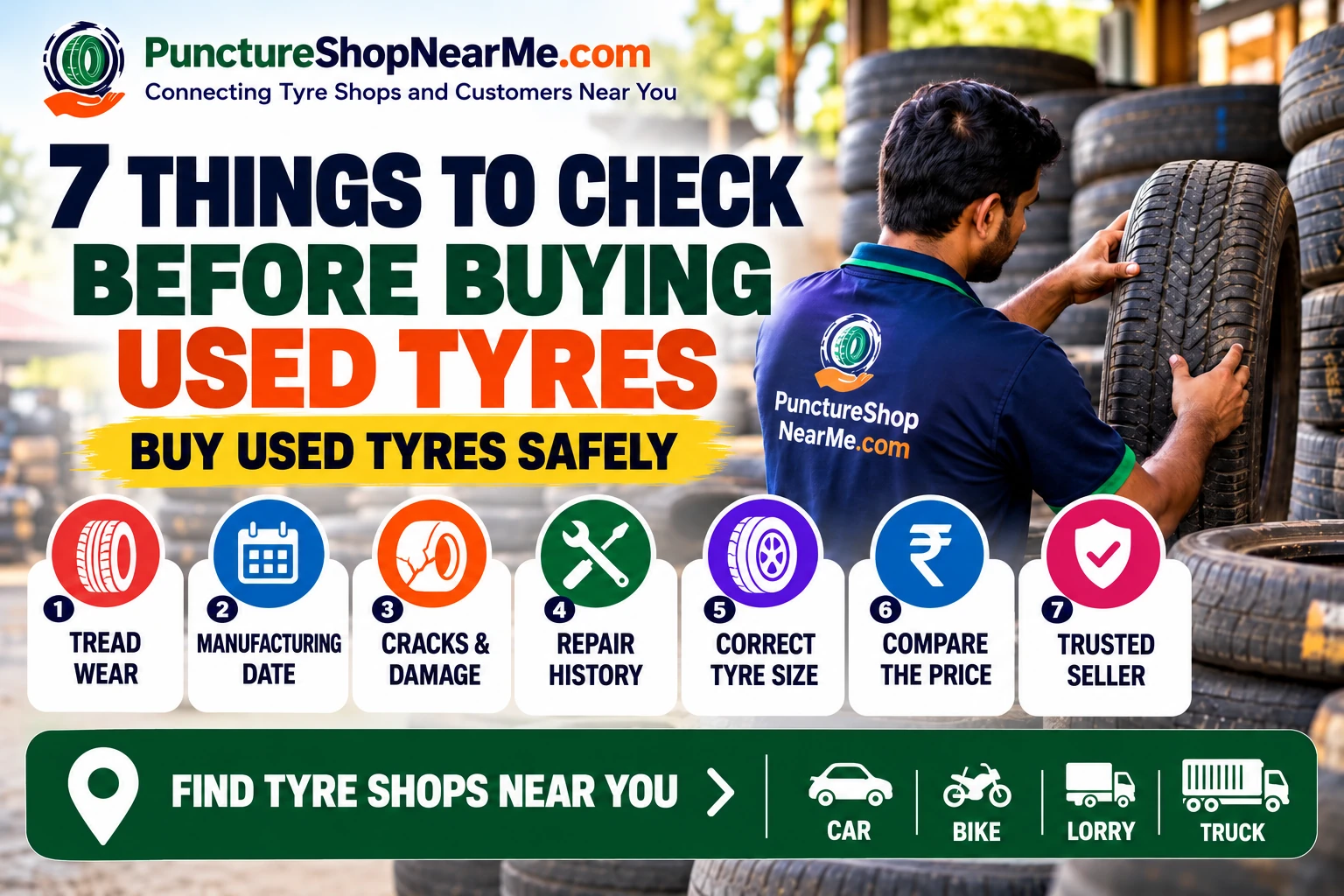
In this guide, we explain seven important things to check before buying used tyres.
1. Check the Tyre Tread Wear
The first thing to inspect when buying a used tyre is its tread depth and wear pattern.
Tyre tread helps maintain grip on the road, particularly in wet conditions. Excessively worn tread can reduce traction and increase the risk of losing control or skidding.
Look for:
- Uneven wear across the tyre surface.
- Worn tread grooves.
- Bald patches or exposed internal material.
- Tread wear indicators showing that the tyre has reached its replacement limit.
Uneven wear may indicate previous problems with tyre pressure, wheel alignment or suspension.
Avoid tyres that have insufficient tread depth or show signs of unsafe wear. Do not rely only on the seller’s assurance that the tyre is in good condition.
2. Check the Tyre Manufacturing Date
A tyre’s age is another important factor to consider.
Most tyres have a four-digit manufacturing date code on the sidewall. For example, the code 2524 indicates that the tyre was manufactured during the 25th week of 2024.
Older tyres can deteriorate even when they have not been used extensively. Exposure to sunlight, heat, unsuitable storage conditions and prolonged use can affect the rubber.
Before buying, check the manufacturing date and inspect the tyre for signs of aging. Follow the tyre manufacturer’s recommendations regarding age and replacement.
Remember that the manufacturing date alone cannot determine whether a used tyre is safe.
3. Look for Cracks, Cuts and Bulges
Carefully inspect the tyre’s sidewalls and tread surface for visible damage.
Pay particular attention to:
- Cracks in the rubber.
- Deep cuts or punctures.
- Bulges or bubbles on the sidewall.
- Exposed cords or internal material.
- Signs of separation or deformation.
A bulge can indicate damage to the tyre’s internal structure and may increase the risk of sudden tyre failure.
Do not purchase a tyre with a sidewall bulge, exposed cords or suspected structural damage. Ask a qualified tyre professional to inspect any tyre whose condition is uncertain.
4. Ask About Previous Punctures and Repairs
Some used tyres may have been repaired after punctures or other damage.
Not every repair makes a tyre unsafe, but the location and nature of the damage matter. Certain small punctures in the tread area may be repairable using an appropriate professional procedure.
Sidewall damage and structural damage generally cannot be treated as ordinary puncture repairs.
Before purchasing, ask the seller:
- Has the tyre been punctured previously?
- Where was the damage located?
- What repair method was used?
- Has the tyre shown any signs of air leakage?
When in doubt, get the tyre inspected by a qualified professional before making a decision.
5. Make Sure the Tyre Size Matches Your Vehicle
Not every used tyre is suitable for every vehicle.
Check the tyre size, load index and speed rating against the vehicle manufacturer’s recommendations. The correct specifications depend on the vehicle and its intended use.
For example, a tyre suitable for one car may not be appropriate for another car. Truck tyres also need to meet the required load capacity and operating conditions.
Before Buy Used Tyres Safely:
- Confirm the correct tyre size.
- Check the load index and speed rating.
- Verify compatibility with your vehicle.
- Follow the vehicle manufacturer’s recommendations.
Never choose a tyre based on price alone if its specifications do not match your vehicle.
6. Compare the Price With the Tyre’s Condition
One of the main reasons people buy second-hand tyres is to save money. However, the cheapest option may not offer the best value.
Compare the asking price with the tyre’s condition, remaining tread, manufacturing date and expected useful life.
Also consider additional expenses such as fitting, balancing and any other necessary service charges.
Ask yourself:
- Is the tyre in safe, usable condition?
- How much tread life is likely to remain?
- Is the price reasonable for its condition?
- Would a new tyre be a better long-term investment?
If the tyre is badly worn or has questionable damage, the potential savings are not worth the safety risk.
7. Buy From a Trustworthy Seller
Choosing a reliable seller is just as important as inspecting the tyre.
A trustworthy seller should be willing to provide accurate information about the tyre’s condition and allow a reasonable inspection before purchase.
Before Buy Used Tyres Safely:
- Ask for clear photographs of the tread and sidewalls.
- Check the manufacturing date.
- Inspect the tyre in person whenever possible.
- Ask about previous repairs and usage.
- Request a receipt or written record of the purchase.
Photographs can help you identify obvious issues, but they cannot confirm that a tyre is structurally safe. An in-person inspection by a qualified tyre professional is preferable.
Avoid sellers who refuse to answer basic questions or pressure you into buying without an inspection.
Is Buying Used Tyres Always a Good Idea?
No. Buying used tyres may reduce the initial cost, but the decision depends on the tyre’s condition, compatibility and remaining useful life.
Drivers who regularly travel long distances, drive at highway speeds or carry heavy loads should be particularly careful.
If you cannot establish that a used tyre is safe and suitable for your vehicle, choosing a new tyre may be the better option.
Never compromise on tyre safety to save money.
Want to Sell Your Old Tyres?
If you have replaced your vehicle’s tyres, you may be wondering whether the old ones can still be sold.
First, check whether they remain suitable for safe use. Record the tyre size, manufacturing date and condition, and take clear photographs of the tread and sidewalls.
Be transparent about any known damage or previous repairs. Tyres that are unsafe or unsuitable for further use should not be advertised as roadworthy.
People looking to buy or sell used tyres can explore options based on their vehicle type and location.
Frequently Asked Questions
Is it safe to buy second-hand tyres?
It depends on their condition, age, tread depth, repair history and compatibility with your vehicle. A qualified tyre professional should inspect any tyre whose safety is uncertain.
How can I check the manufacturing date of a tyre?
Look for the four-digit date code on the sidewall. The first two digits indicate the production week, and the last two indicate the year.
Can I buy a used tyre that has been repaired?
Some tread-area punctures can be repaired safely using an appropriate professional method. However, sidewall or structural damage can make a tyre unsuitable for further use. Get expert advice before buying.
What should I check before buying used truck tyres?
Check tread depth, manufacturing date, load rating, sidewall condition, previous repairs and suitability for the truck’s operating conditions. Heavy vehicles require particular attention to tyre safety.
Are cheap used tyres always worth buying?
No. Consider the tyre’s condition, remaining useful life and total fitting cost. A low purchase price does not necessarily mean better value.
Conclusion
Buying used tyres can help reduce expenses, but safety should always be your first priority.
Check the tread wear, manufacturing date, sidewall condition, repair history and vehicle compatibility before making a purchase. If anything looks suspicious, consult a qualified tyre professional.
Looking for tyre services or nearby tyre shops? Visit PunctureShopNearMe.com to explore tyre-related services and find shops in your area.
Choose your tyres carefully. Drive safely.
Michelin India — How to Interpret Tyre Wear Indicators
Explains tread wear, cracks, sidewall damage and when tyres need replacement.
https://www.michelin.in/auto/advice/change-tyres/tyre-wear-indicator