
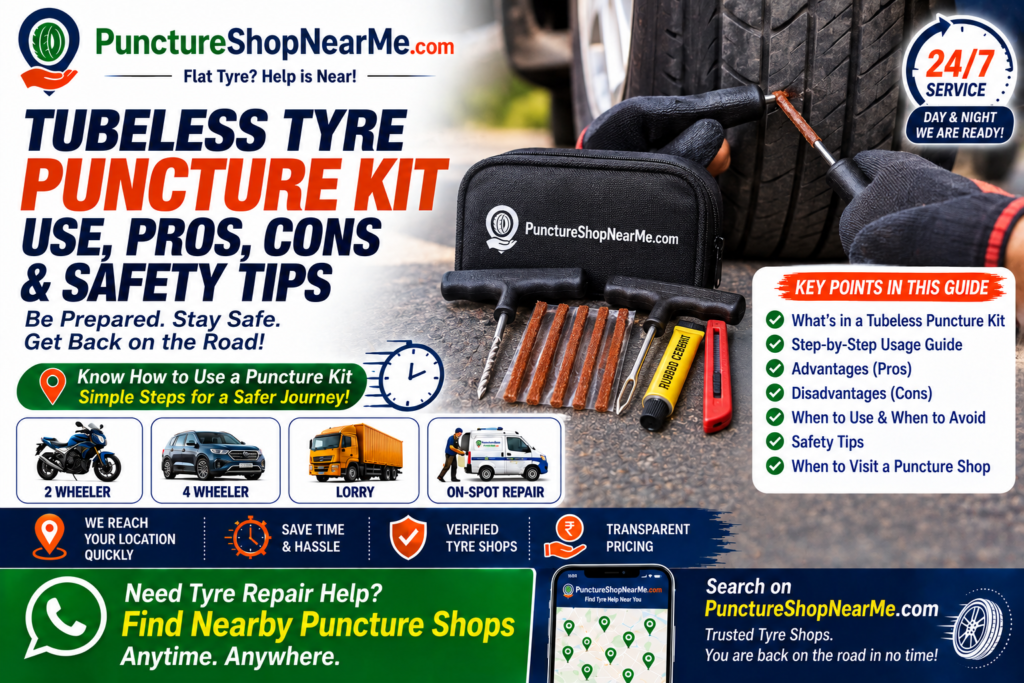
Tubeless Tyre Puncture Kit
A tubeless tyre puncture kit can be a useful item to keep in your car or bike, especially when you get a small puncture while travelling. Instead of waiting immediately for a puncture shop, a suitable repair kit can help you temporarily seal certain tread punctures and restore enough air pressure to continue your journey.
However, a puncture kit is not the right solution for every type of tyre damage. A damaged sidewall, large cut, badly damaged tyre, or tyre with structural problems needs proper professional attention.
In this guide, we will explain what a tubeless tyre puncture kit is, how to use one, its advantages and disadvantages, and when you should visit a professional tyre repair shop.
What Is a Tubeless Tyre Puncture Kit?
A tubeless tyre puncture kit is a small roadside repair tool that helps you seal certain punctures in tubeless tyres without removing the tyre from the wheel.
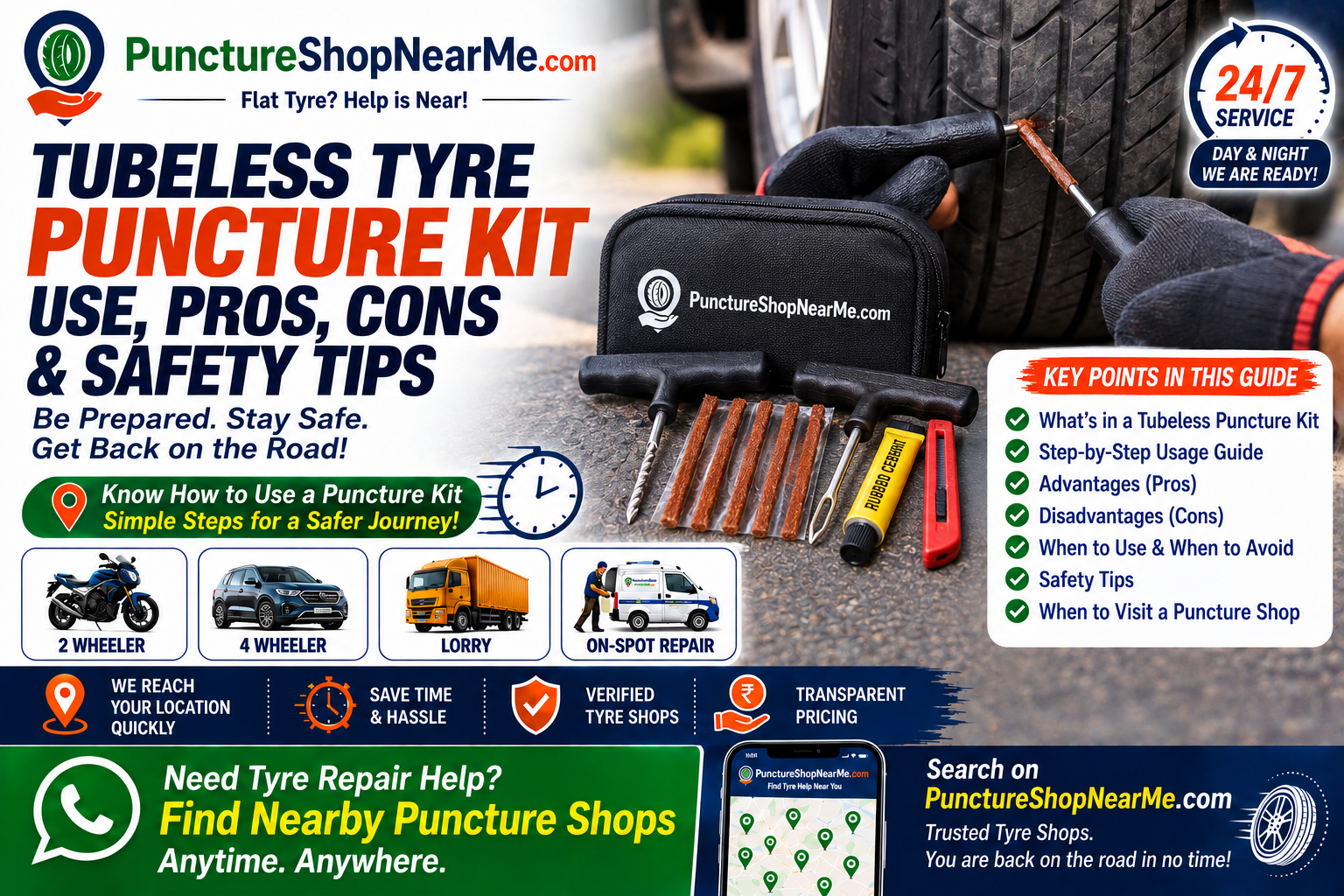
Most kits contain items such as:
- Reaming tool
- Insertion tool
- Rubber repair strips or plugs
- Cutting blade
- Sometimes rubber cement or repair solution
- Other small accessories depending on the kit
The basic idea is simple. After removing the object that caused the puncture, insert the repair strip into the puncture channel to seal the hole and reduce air leakage.
Many motorcycle and car owners keep these compact kits in their vehicles because they are easy to store and useful during a roadside emergency.
When Is a Tubeless Puncture Kit Useful?
A puncture kit is mainly useful for a small puncture in the tread area of a tubeless tyre.
For example, you may notice that your bike tyre is slowly losing air after a nail or screw has entered the tread. If the tyre is otherwise in good condition, a suitable puncture repair kit may provide a temporary roadside solution.
It is particularly useful when:
- You are travelling away from a tyre shop.
- Your tyre is losing air slowly.
- The puncture is located in the tread area.
- You need a temporary roadside solution.
- You have the necessary tools and know how to use them safely.
Remember that the suitability of a plug repair depends on the tyre, puncture location, damage size and the manufacturer’s recommendations.
How to Use a Tubeless Tyre Puncture Kit
Using a tubeless tyre puncture kit may look simple, but you need to repair the tyre carefully.
1. Find the Puncture
First, inspect the tyre and identify where air is escaping.
If you cannot see the puncture clearly, apply a little soapy water around the suspected area. Bubbles can help identify an air leak.
Do not put your hands directly over a suspected high-pressure leak.
2. Remove the Nail or Other Object
If a nail, screw or similar object is responsible for the puncture, remove it carefully using an appropriate tool.
Before removing it, make sure you understand that removing the object may cause the tyre to lose air more quickly.
3. Prepare the Puncture Hole
The reaming tool supplied with the kit is normally used to clean and prepare the puncture channel.
Insert it carefully and follow the instructions supplied with your particular repair kit.
Avoid unnecessarily enlarging the hole because excessive damage can make the tyre more difficult to repair.
4. Prepare the Repair Strip
Take one repair strip and insert it into the puncture insertion tool according to the kit instructions.
The strip needs to be positioned correctly so that it can seal the puncture.
5. Insert the Repair Strip
Push the repair strip into the prepared puncture using the insertion tool.
Do not force the tool aggressively. Follow the instructions supplied with the specific kit because designs and recommended insertion methods can vary.
6. Trim the Excess Material
After inserting the strip, trim the excess material that remains outside the tread.
Avoid cutting deeply into the tyre surface.
7. Inflate the Tyre
Inflate the tyre to the vehicle manufacturer’s recommended pressure.
Then check the repaired area for air leakage.
Soapy water can again be useful for checking whether bubbles are forming around the repair.
8. Get the Tyre Professionally Inspected
Even if the tyre appears to hold air after the repair, a professional inspection is a sensible next step, particularly before continuing a long journey.
A tyre professional can determine whether the tyre is suitable for continued use or needs a proper repair or replacement.
Pros of a Tubeless Tyre Puncture Kit
A tubeless puncture kit has several advantages, which is why many riders and drivers keep one in their vehicle.
Quick Roadside Solution
A small puncture can sometimes be dealt with at the roadside without immediately removing the wheel or waiting for a repair shop.
Easy to Carry
Most puncture kits are small enough to keep under a car seat, in a tool box or inside a motorcycle storage compartment.
Affordable
Compared with calling for roadside assistance or arranging a tow for every small puncture, a basic kit can be an inexpensive emergency item.
Useful During Long Trips
If you regularly travel through areas where tyre shops are not nearby, carrying a repair kit can provide additional peace of mind.
No Need to Remove the Tyre
For suitable tread punctures, a plug-style repair can generally be performed without taking the entire tyre off the wheel.
Cons of a Tubeless Tyre Puncture Kit
Despite its usefulness, a puncture kit also has limitations.
It Is Not Suitable for Every Puncture
A repair strip cannot safely solve every type of tyre damage.
For example, sidewall damage is very different from a small tread puncture and generally requires professional assessment.
Incorrect Installation Can Cause Problems
If the puncture is not prepared correctly or the repair strip is inserted improperly, the repair may leak.
This is one reason professional tyre repair can be preferable when a tyre shop is accessible.
It May Not Be a Permanent Solution
A roadside plug should not automatically be treated as a permanent repair.
Whether a plugged tyre can remain in service depends on the type and location of the puncture, the tyre manufacturer’s guidance, and how the repair is performed.
Large Cuts Are a Different Problem
A nail-sized puncture and a large cut are not the same thing.
If the tyre has a significant cut, exposed internal material, bulge, sidewall damage or other serious defect, do not rely on a basic puncture kit.
You Still Need to Check Tyre Pressure
After any puncture repair, maintaining the correct tyre pressure is important.
A tyre that continues to lose pressure should be inspected rather than repeatedly plugged or inflated.
Tubeless Puncture Kit vs Professional Puncture Repair
A puncture kit is best viewed as a roadside emergency tool, not as a replacement for professional tyre service.
A professional tyre technician can inspect the inside and outside of the tyre and determine whether the damage can be repaired safely.
For a small tread puncture, a professional may be able to provide a more appropriate repair depending on the tyre and manufacturer’s recommendations.
If you are unsure about the damage, visiting a nearby puncture shop is the safer choice.
Can You Drive Long Distance After Using a Puncture Kit?
This is one of the most important questions.
Do not assume that a tyre is automatically safe for a long-distance journey simply because it is holding air after using a repair strip.
Before continuing your journey, check the tyre pressure and inspect the repair. If possible, have the tyre checked by a qualified tyre professional.
You should be especially cautious if:
- The tyre continues to lose air.
- The puncture is large.
- The damage is near the sidewall.
- The tyre has a bulge or visible deformation.
- The tyre has been driven while severely underinflated.
- You notice vibration or unusual handling.
When in doubt, stop and get professional assistance.
Common Mistakes to Avoid
When using a tubeless tyre puncture kit, avoid these common mistakes:
Do not keep driving on a severely underinflated tyre. Low pressure can cause additional tyre damage.
Do not repair sidewall damage with a basic plug kit. Sidewalls experience significant flexing and require professional assessment.
Do not ignore repeated air loss. If the tyre loses pressure again, investigate the problem instead of repeatedly adding air.
Do not use damaged or expired repair materials. Follow the instructions supplied with your kit.
Do not assume every puncture is repairable. The condition and construction of the tyre matter.
When Should You Replace the Tyre?
Sometimes repairing the puncture is not the correct solution.
A tyre may need replacement if it has serious sidewall damage, a major cut, structural damage, severe wear, a significant bulge or other defects that make continued use unsafe.
A professional tyre technician can inspect the tyre and advise whether repair or replacement is appropriate.
Is It Worth Keeping a Tubeless Puncture Kit?
For many car and motorcycle owners, carrying a tubeless tyre puncture kit is a sensible emergency precaution.
It takes up little space and can be useful when a small tread puncture occurs far from a tyre shop.
However, think of it as one part of your emergency equipment—not as a guarantee that every puncture can be repaired at the roadside.
A good emergency setup can also include:
- Tyre inflator or portable air compressor
- Tyre pressure gauge
- Torch
- Basic vehicle tools
- Emergency contact information
Most importantly, know when to stop trying to repair the tyre yourself and call a professional.
Frequently Asked Questions
Can I use a tubeless tyre puncture kit on a car tyre?
A suitable kit may be used for certain small tread punctures on tubeless car tyres. However, always check the kit instructions and the tyre manufacturer’s recommendations before attempting a repair.
Can I use a tubeless puncture kit on a bike tyre?
Yes, some kits are designed for motorcycle and scooter tubeless tyres. Make sure the kit is appropriate for your tyre and follow its instructions carefully.
Is a tubeless tyre puncture kit a permanent repair?
Not necessarily. A plug used as a roadside repair should not automatically be considered a permanent repair. Have the tyre inspected by a professional whenever possible.
Can a puncture kit repair a sidewall puncture?
Do not use a basic tubeless puncture kit to repair sidewall damage. Sidewall damage can affect the structural integrity of the tyre and needs professional assessment.
How long can I drive after using a puncture kit?
There is no universal distance that is safe for every repaired tyre. The condition of the tyre, puncture and repair all matter. Check the tyre pressure and get professional inspection before making a long journey.
Should I keep a puncture kit in my vehicle?
For drivers and riders who frequently travel long distances, carrying a suitable puncture kit can be useful as part of an emergency kit.
Final Thoughts
A tubeless tyre puncture kit can be a convenient solution when you experience a small tread puncture away from a tyre shop. It is compact, affordable and can help you deal with certain roadside emergencies.
However, it is important to understand its limitations.Not every puncture can be safely repaired with a plug. For example, take sidewall damage, large cuts, severe air loss, and other serious tyre problems to a professional for inspection.
If your tyre has damage and you are unsure what to do, find a nearby professional puncture repair shop. A tyre expert can inspect the damage and recommend the right solution.
For local tyre puncture repair, you can use PunctureShopNearMe.com to find nearby tyre service providers.
Drive safely, check your tyre pressure regularly, and don’t take chances with a damaged tyre.